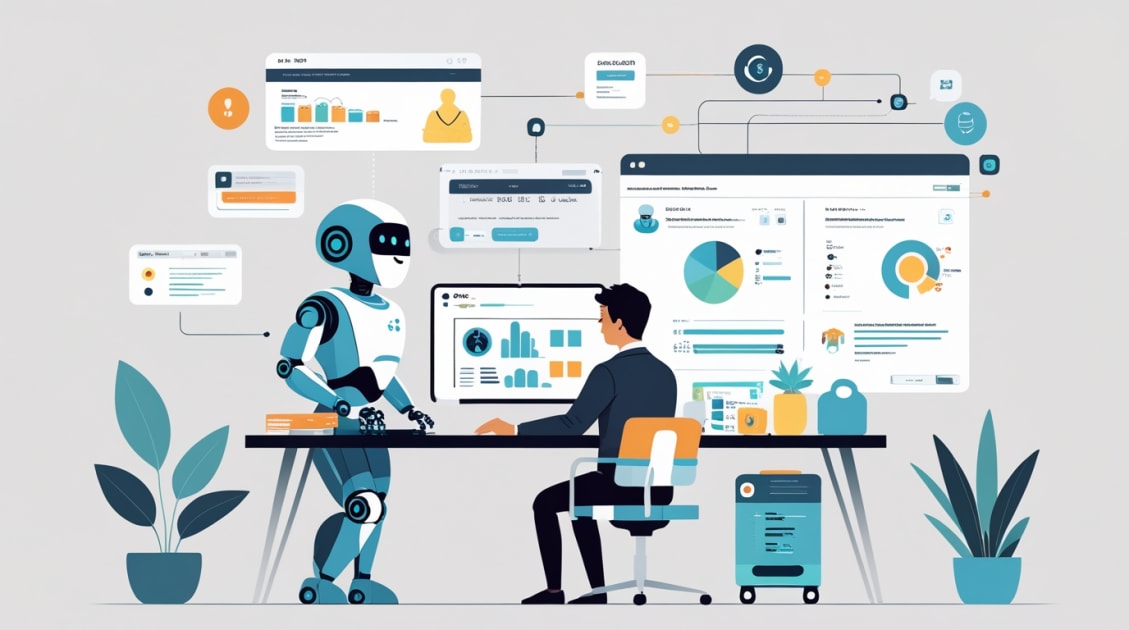
The conversation around AI is shifting. Businesses are no longer asking whether they should use AI they’re asking how much capacity AI can realistically replace or augment. This is where the concept of Digital FTEs (Full-Time Employees) comes in.
A Digital FTE is not a robot and not science fiction. It’s an AI system designed, priced, and managed as a full-time workforce unit, similar to a human employee. Instead of being measured in tokens or API calls, it is measured in output, reliability, and responsibility. A Digital FTE works nearly 9,000 hours a year vs a human's 2,000. The cost per task reduction (from ~$5.00 to ~$0.50) is an 85–90% cost saving usually the threshold where a CEO approves a project without further debate.
Examples are already emerging:
- Digital Sales Agents qualifying leads
- Digital Support Agents handling Tier-1 queries
- Digital Accountants processing invoices and reconciliations
Unlike traditional automation tools, Digital FTEs are expected to own workflows, operate continuously, and follow defined rules with consistency. They don’t replace every aspect of human work, but they excel at structured, repetitive, and high-volume tasks often outperforming humans in speed and availability.
What makes this shift important is the business framing. Companies think in terms of headcount, cost, and productivity. Digital FTEs fit directly into that model. Instead of asking “Should we use AI?”, organizations are beginning to ask:
“How many Digital FTEs do we need to run this operation efficiently?”
The future workforce is not human versus AI. It is AI-first, human-supervised. Digital FTEs handle scale and consistency, while humans focus on judgment, strategy, and complex decision-making.
This isn’t a trend it’s a structural change in how work is defined.