BLOGS
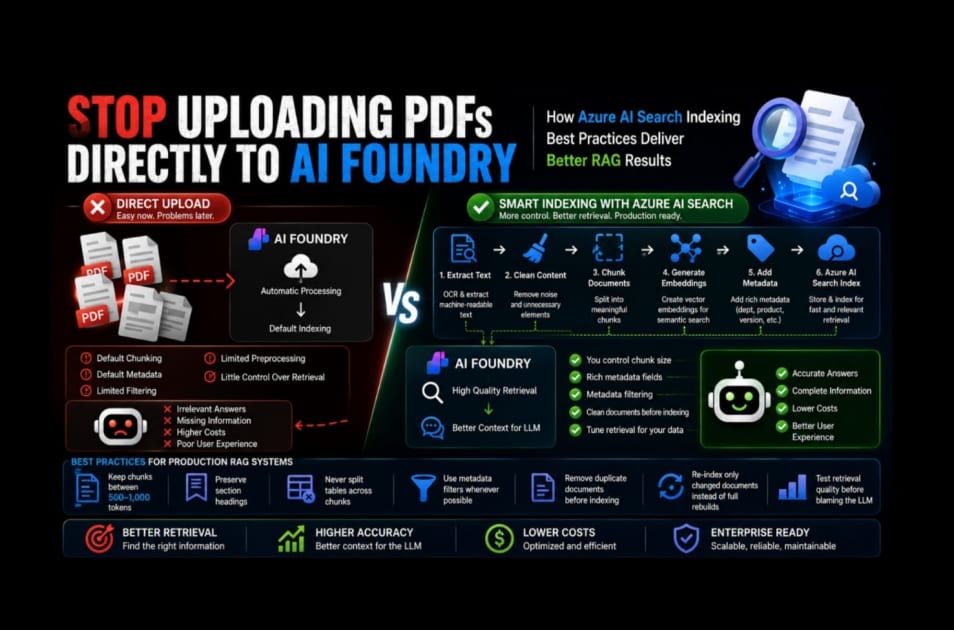
Stop Uploading Files Directly to AI Foundry
Directly uploading documents into AI Foundry works well for prototypes, but as your knowledge base grows, retrieval quality becomes more important than the LLM itself. This article explores why building a custom Azure AI Search indexing pipeline gives you greater control over chunking, metadata, filtering, and retrieval, resulting in more accurate, scalable, and production-ready RAG applications.
MarkItDown: Turning Any Document into LLM-Ready Markdown
MarkItDown is Microsoft’s open-source tool that converts messy documents like PDFs, Word files, and slides into clean Markdown for LLMs. It reduces token waste by removing formatting noise and structuring content efficiently before it reaches the model. The result is cheaper, faster, and higher-quality AI pipelines, especially for RAG systems.
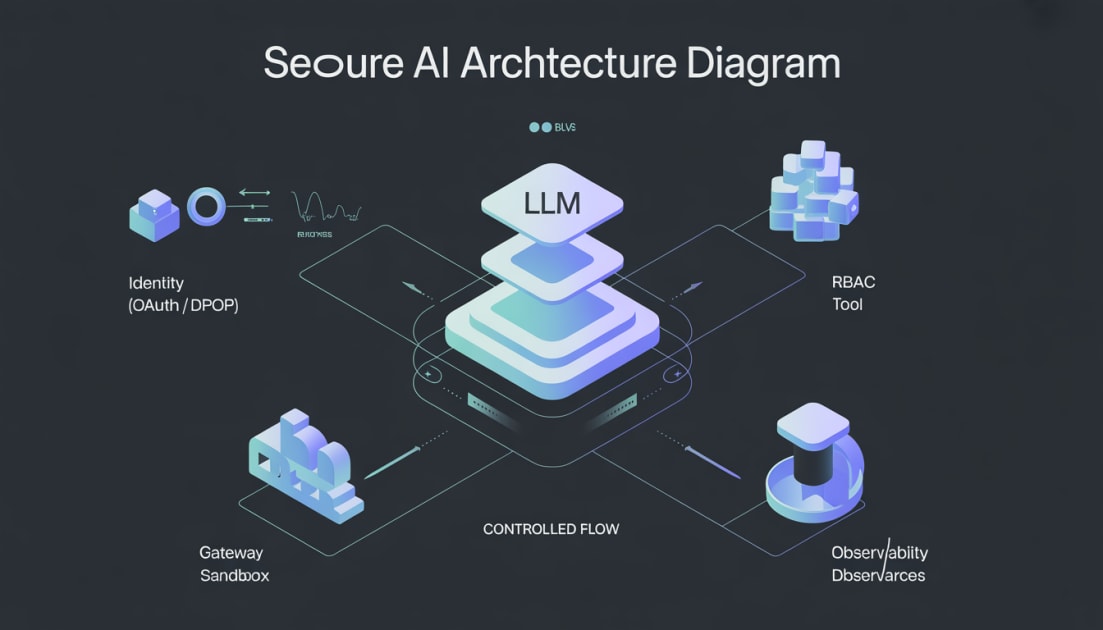
Production-Grade MCP Security Architecture
MCP systems don’t fail because teams lack awareness of security risks, but because enforcement layers are incorrectly or inconsistently implemented. This blog outlines a production-grade architecture where the LLM only suggests actions while the system enforces them through identity controls, RBAC, tool gateways, sandboxing, and strict validation. The goal is to ensure every tool execution is verified, scoped, and securely isolated before anything reaches production.
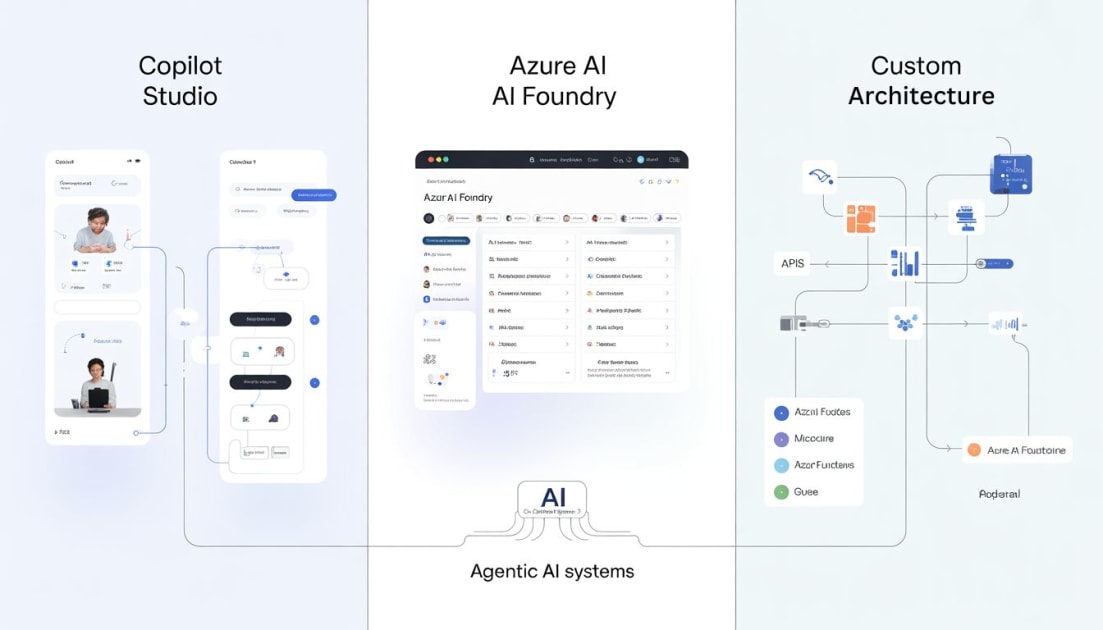
Azure AI Foundry vs Copilot Studio vs Custom Architectures: How to Actually Choose the Right Agentic AI Approach
In the Azure ecosystem, there isn’t a single “best” way to build AI agents, there are different levels of abstraction. Microsoft Copilot Studio offers speed and powerful out-of-the-box orchestration, especially when combined with well-designed tools and MCP integrations. Azure AI Foundry provides a middle ground for experimentation and structured agent development. Custom architectures, on the other hand, give full control, reliability, and scalability at the cost of complexity and development effort. The real decision is not about features, it’s about how much control you need versus how fast you need to ship. Modern platforms can handle more than ever, but as systems grow in complexity, the need for deterministic execution and deeper control becomes more important.

The Fastest Python Package Manager You’ll Ever Use
uv is a modern, high-performance Python packaging tool designed to replace traditional tools like pip and virtualenv. Built with speed and simplicity in mind, uv combines dependency management, virtual environments, and package installation into a single workflow delivering significantly faster performance and a smoother developer experience. This blog explores how uv works, why it’s gaining traction, and whether it’s ready for real-world projects.
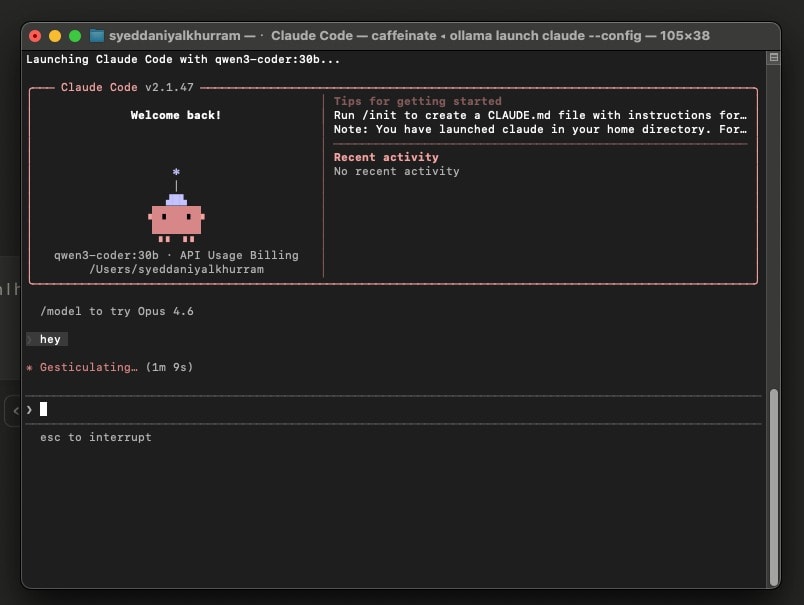
A Step-by-Step Guide to Install and Run Cloud Code for Free (Using Ollama + Qwen3Coder 30B)
n this step-by-step guide, you’ll learn how to install and run Cloud Code locally for free using Ollama and the Qwen3Coder 30B large language model on macOS. We’ll walk through installing Ollama, downloading the Qwen3Coder model, verifying the installation, integrating it with Cloud Code, and launching your own local AI coding assistant. By the end of this tutorial, you’ll have a fully functional Cloud Code setup running on your machine without relying on paid cloud APIs.

Digital FTEs: The Rise of AI as a Workforce Unit
FTE is a business concept, not a technology. AI agents become FTEs only when they are treated like workers: fixed cost, defined responsibility, measurable output. This is now being called Digital FTEs or FTE AI Agents. Digital FTEs excel at structured, repetitive, high-volume work. Humans remain essential for judgment, strategy, and complex decisions. The future workforce is AI-first, human-supervised not AI replacing people, but redefining capacity.